A clean, fine mix
Seed needs a sterile, light mix and a clean container. Garden soil brings disease, weed seed and a crust seedlings cannot break.
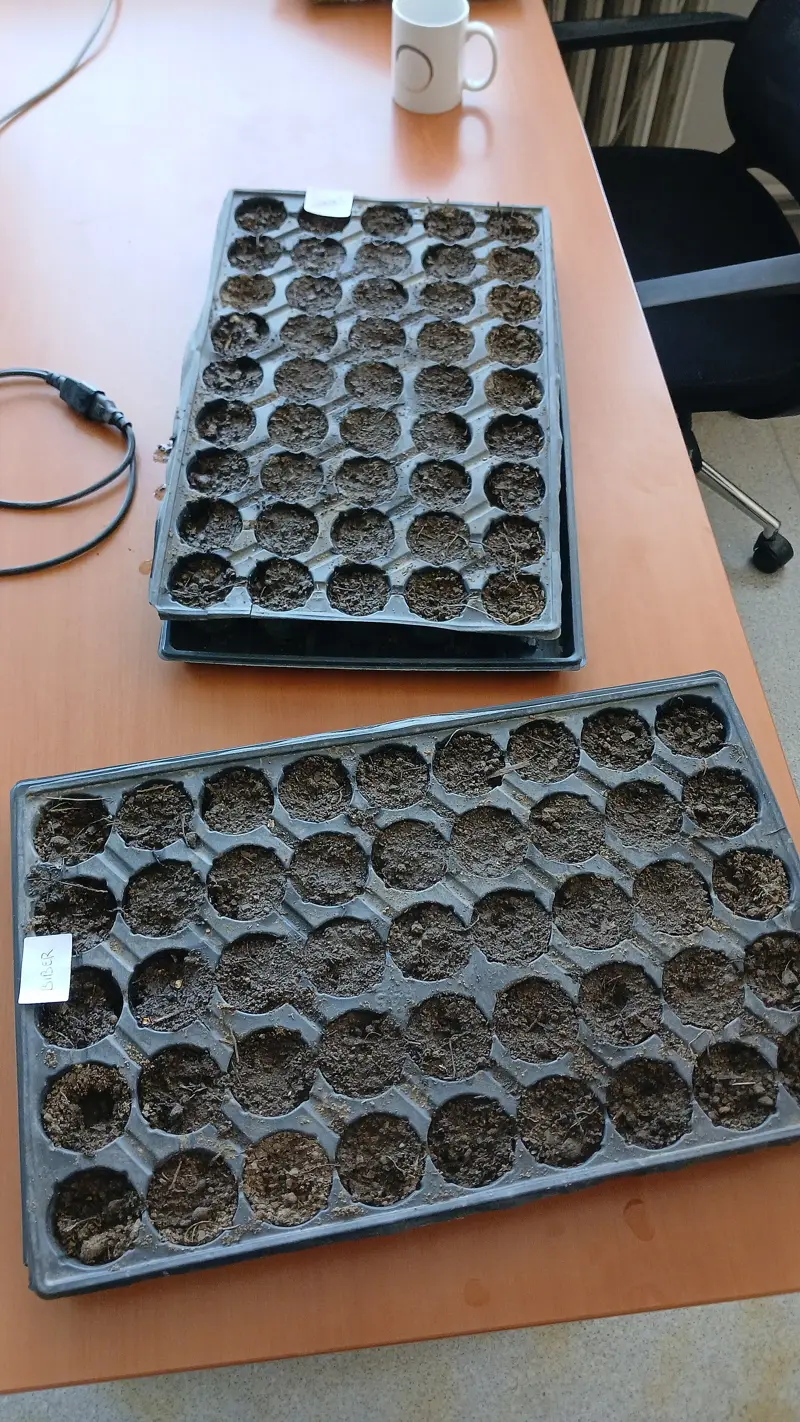
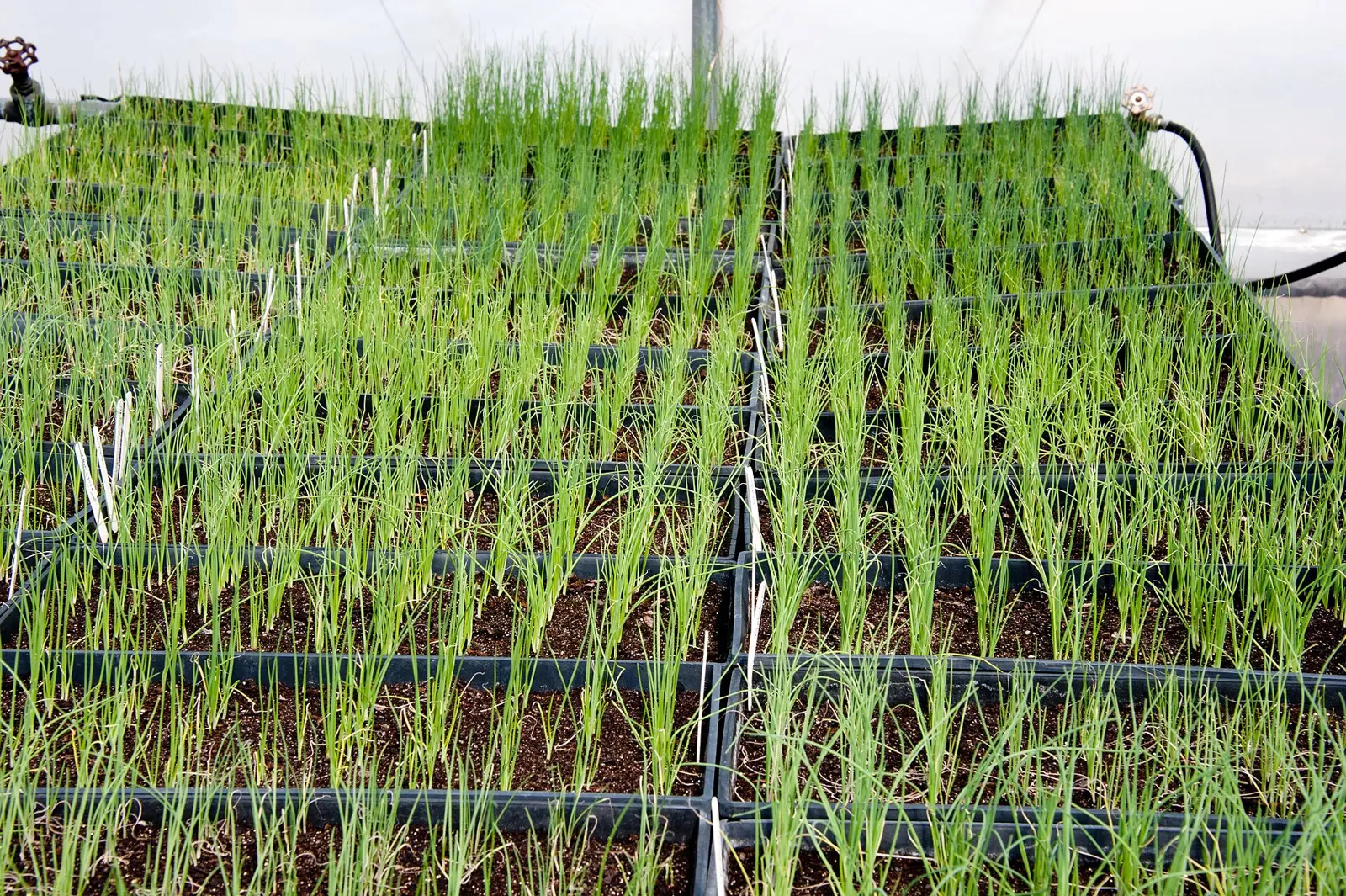
Plain, sourced technique for beginners, with a planner that works from your last frost date.
Every packet has a back with instructions. This is the longer version: the reasons behind them, so you can fix a tray when it goes wrong.
Around the temperature most seeds need to germinate. RHS, temperature
From sowing to transplanting a tomato. Clemson Extension, tomatoes
To harden off indoor seedlings before planting out. RHS, hardening off
Seed needs a sterile, light mix and a clean container. Garden soil brings disease, weed seed and a crust seedlings cannot break.
Warm to germinate, bright to stay sturdy, damp but never soaked. Most failures are one of these three.
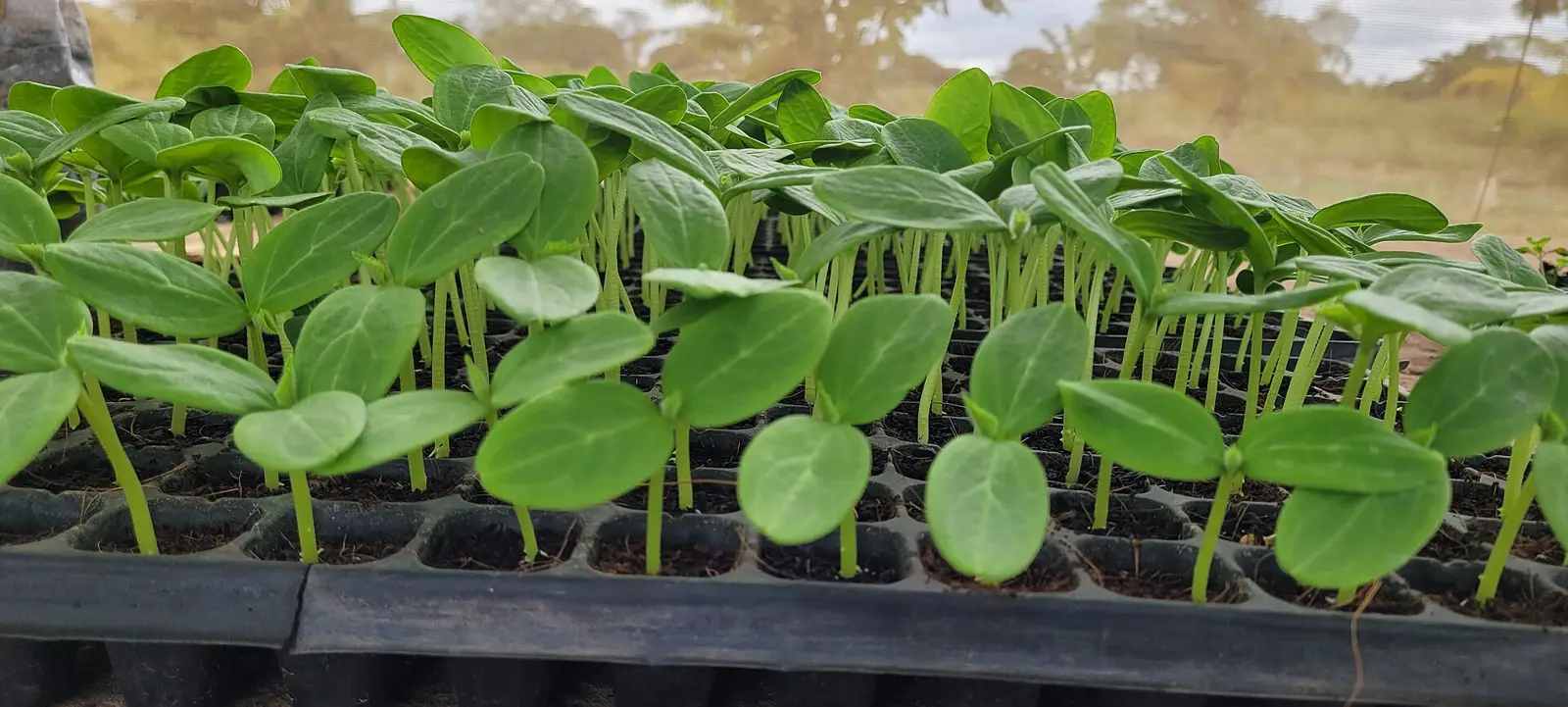
Soft indoor growth needs two to three weeks to meet wind, sun and cold. Tender crops wait for the last frost.
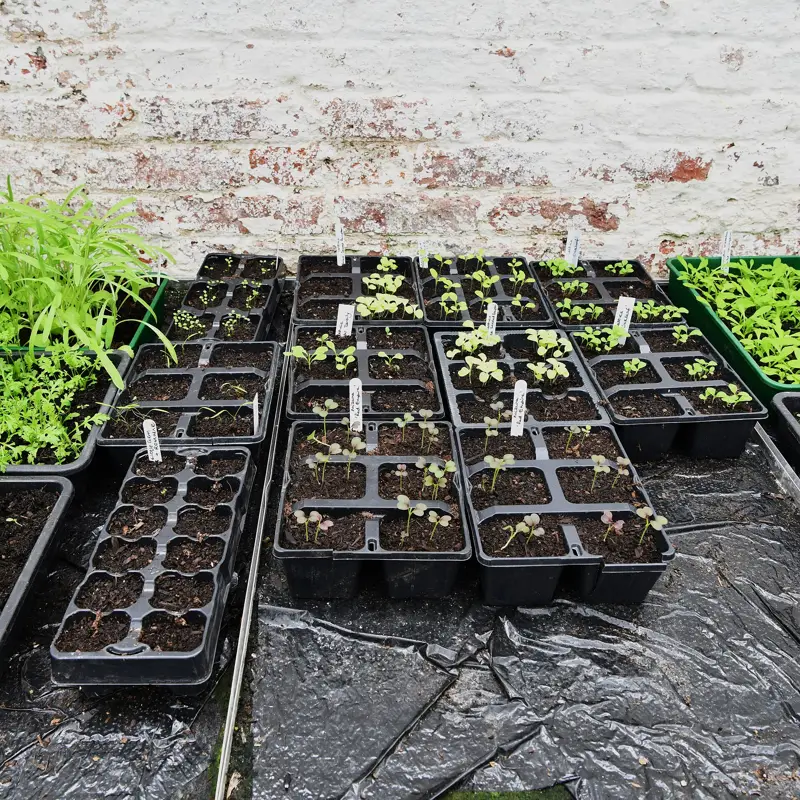
Beans, peas, tomatoes and lettuce mostly pollinate themselves, so their seed comes true. Dry it well and store it cool and dark.
Enter your average last frost date and see tomatoes worked out. The full planner does peppers, squash, brassicas, lettuce and more, and exports to your calendar.
Tender crops go out on or after the last frost. Source: Clemson Extension and the RHS.
Containers, mixes, depth and the steps in order.
What seeds and seedlings need once they are sown.
Feeding, moving on, mould and everyday care.
Hardening off, transplanting and timing by crop.
Collecting your own seed, and what to do when nothing comes up.
Work back from your average last frost date. Seed to transplant takes 3 to 5 weeks for squash and cucumbers, 5 to 7 for lettuce and brassicas, 6 to 8 for tomatoes and 8 to 10 for peppers (Clemson Extension). The planner does the sums. Open the planner
The RHS says most seeds need around 18°C (65°F) to germinate; extension guides give 65 to 75°F. Check the mix with a thermometer, not the room. Temperature guide
Not enough light. Clemson Extension says window light is usually not enough indoors; put a grow light 2 to 4 inches above the seedlings and raise it as they grow. Light guide
Two to three weeks, according to the RHS and Clemson. Out by day and in at night at first, then more exposure each week. Hardening off
Probably not yet. Slow seed can take weeks, and cold is the usual culprit. Dig up a seed: firm and pale is alive. Troubleshooter
Yes. Start with beans, peas, tomatoes and lettuce, which mostly pollinate themselves, and avoid F1 hybrids (University of Maryland and Montana State extension). Saving seed
Technique here, plants there. Once you know how to sow, choose what to grow.
Plant-by-plant seed information and organic seed sources are on organicseedfinder.com.
Go to organicseedfinder.com